
Moves together
Page under construction“A trauma informed system moves together, aiming to align across the system. This is how we work together keeping the person at the centre.”
This page give an outline of…
- Our vision of a more trauma informed system
- Ways to cooperate, sharing better
- How commissioning can support being more trauma informed
- The importance of reflection
- The Cambridgeshire & Peterborough trauma informed network
Our vision of a more trauma informed system
By working together, individuals and organisation have set out what we mean by a “trauma informed system”.- People working across Cambridgeshire and Peterborough may work in trauma informed ways, and take a trauma informed approach to their customers and their workmates.
- Organisations may be trauma informed, having a trauma informed policy and training programmes to help staff work in trauma informed ways, making sure they are supported by managers so as to avoid or deal with any trauma they encounter.
- But a third, perhaps less well known area, is looking at how organisations deal with each other. How do staff members in one service work with people in other professions or agencies, such as health, housing, social care, or working with voluntary agencies or faith organisations? How organisations deal with each other and how they help the pee they support, to “find their way around” is vital.
- Many people who face multiple disadvantage or any trauma may well disengage or loose their sense of control or energy, if they feel “passed around”. So it’s up to the partners to work out how to do better, how to keep the person who needs the support, at its centre! This is why we have devised what we see as the three key features of a trauma informed SYSTEM:
- Centres on the person: focusses on the person, not the process. We listen & respond to the people living through it.
- Adjusts to conditions: learning, adapting and reflecting together. We are open to improvement through questions and challenge.
- Moves together: Aim to align across the system. We work on how to work together, keeping the person at the centre.
Ways to cooperate, sharing better
Ways to cooperate
Links to Tom’s group which is looking at issues and seeking to resolve… ask that group for suggestions on both wording and perhaps a few examples?Better ways to work with other agencies
(used to be “refer” in Sue’s language, this is not the right term, needs to be more about building cooperation and relationship). Could include links to directories or other useful info?? HAY etc?)Sharing better
Guidance on information sharing Link to trusted person info sharing note here (once completed) “Sharing better”?How commissioning can support being more trauma informed
We believe it will help people who buy in, or commission, any service to have some simple ‘watch words’ to make sure the provider who takes on the work will take a trauma informed approach. There are the six “tenets” set out by the government about what a trauma informed approach includes, summary here. The headlines (using the government and NHS six tenets) are:- Safety: The physical and emotional safety of clients is prioritised
- Trustworthiness: An organisation’s policies and procedures are both transparent and clearly communicated, with the intention of building trust among staff, service users and the surrounding community
- Choice: Service users are given sufficient choice and supported in shared decision-making goal setting to determine the infrastructure they need to heal
- Collaboration: Staff and service user experience is utilised to overcome challenges and improve the system as a whole
- Empowerment: Efforts are made to share power and making service users and staff an integral part of decision-making, at both individual and organisational level
- Cultural consideration: Move past cultural stereotypes and biases based on, for example, gender, sexual orientation, age, religion, disability, geography, race or ethnicity.
The importance of reflection
Ways to reflect together Info from reflect fieldwork group hereAbout the Cambridgeshire & Peterborough Trauma Informed Network
Since 2023 a group of people with lived experience and various agencies from across Cambridgeshire and Peterborough have been working to learn about being more trauma informed, and to develop a local approach to how we can all work better together to help people deal with trauma, and to make sure the processes partners use don’t add to their traumas. Also to consider how staff my experience trauma, and ways to help them deal with and recover from that. This bubble chart gives an idea of who is involved in the Trauma Informed in June 2025. To see it in more detail please click on the diagram, and larger version will open in a new window. Or you can find a pdf version here bubbles-july-2025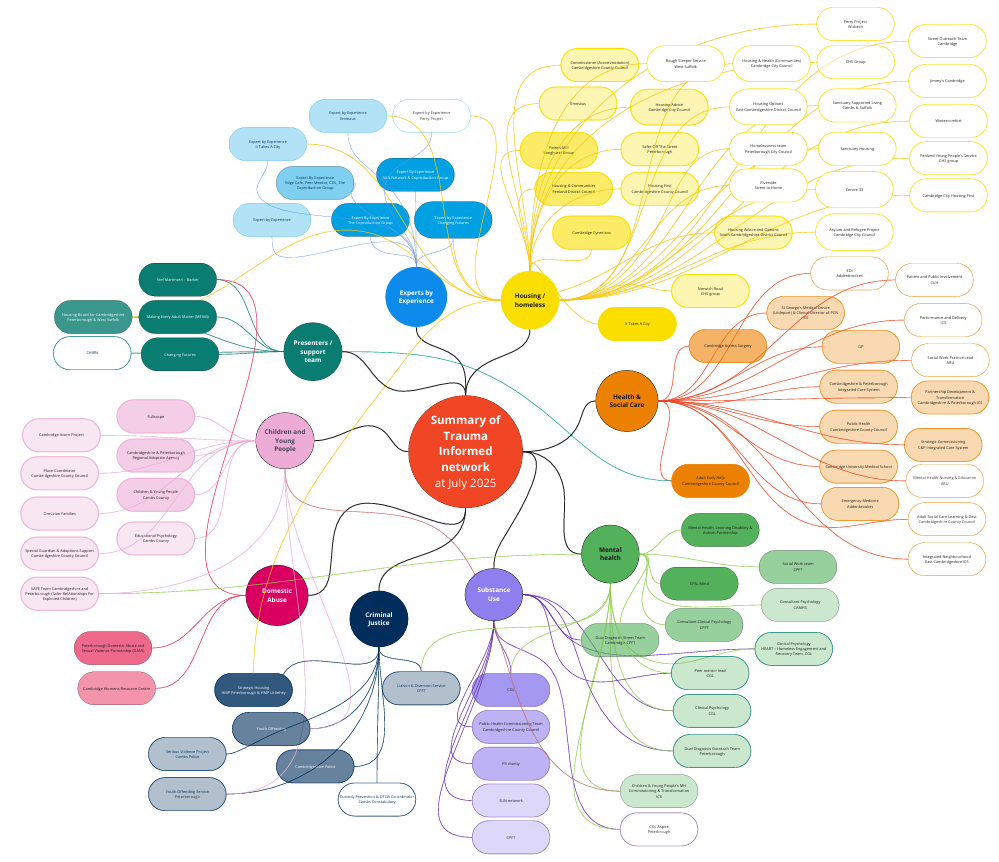
The workshops
The network has formed as a result of working together at various events since 2022. You can track progress at the workshops using these links: Workshop 1, July 2023 A first workshop was been held in July 2023 about trauma informed systems where a number of interested individuals thought the topic through together, sharing learning and experiences. There will be more opportunities to get involved. You can find a whiteboard showing the outcomes of the workshop here. Workshop 2, November 2023
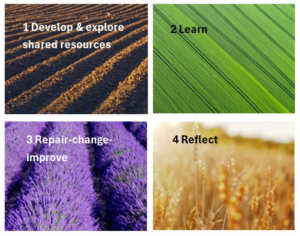 Building on workshop 3 we identified four areas to progress, to form a trauma informed network across Cambridgeshire and Peterborough. As this note sets out, we are encouraging everyone to take part in this fieldwork, on the four themes shown. Here is a note outlining the fieldwork
Workshop 4, April 2025
Write-up , MIRO board, progress on fieldwork
Workshop 5
Coming soon! Date to be agreed early in 2026. please get in touch if you want to know more!
Building on workshop 3 we identified four areas to progress, to form a trauma informed network across Cambridgeshire and Peterborough. As this note sets out, we are encouraging everyone to take part in this fieldwork, on the four themes shown. Here is a note outlining the fieldwork
Workshop 4, April 2025
Write-up , MIRO board, progress on fieldwork
Workshop 5
Coming soon! Date to be agreed early in 2026. please get in touch if you want to know more!