
Anti-Social Behaviour
Anti-social behaviour (ASB) is any behaviour that causes harm, distress, or nuisance to others in the community.
It can affect people’s quality of life and make them feel unsafe in their own homes or neighbourhoods.
Local police, councils, and social housing providers collaborate to address antisocial behaviour, though their approaches may vary from one area to another (Office, 2024), with a goal of keeping our communities safer.
Examples of antisocial behaviour:
Antisocial behaviour can include both criminal and non-criminal behaviour, for example:

How you can help by reporting
Who you report antisocial behaviour to depends on the type of behaviour it is and where it takes place:
- Cambridgeshire Constabulary – if you feel threatened or you think the behaviour could be breaking the law.
- Your District – if it affects your local area.
For further guidance regarding reporting ASB by district please use the following links;
Explore ongoing support
You can get support to deal with antisocial behaviour from:
Community Prevention
The Communities Service supports the Council’s long-term priorities by working alongside local communities, schools, voluntary organisations, parish councils, district councils, police and health partners to develop preventative, place-based solutions that help people live healthy, safe and independent lives. The focus is on early intervention, community resilience and positive opportunities that address the underlying causes of anti-social behaviour, particularly for young people and vulnerable adults.
Examples of preventative work includes:
- Local Problem-Solving Partnerships – The service supports local problem-solving groups that bring together communities and agencies to identify emerging ASB concerns and develop collaborative responses. In one parish, concerns regarding motorcycle-related ASB involving hard-to-reach young people led to the development of a funded youth work programme. The Communities Service helped broker the partnership response and is now connecting the provider with local organisations to deliver a 12-month programme of positive activities.
- Community-Led Responses to ASB – Through village-based partnership meetings, the service has brought together schools, parish councils, youth providers, police and residents to improve communication, share intelligence, strengthen reporting pathways and agree preventative actions. These conversations help communities feel safer, improve understanding of risks facing young people and shape local youth provision to prevent future incidents.
- Preventative Education in Schools – Working alongside Community Safety and Targeted Support colleagues, the service has delivered anti-social behaviour awareness workshops to more than 300 Year 6 and Year 7 pupils. The sessions help young people understand the impact of ASB on communities, the consequences of involvement, and how concerns can be reported. Learning from these sessions is informing future prevention strategies and support services.
- Healthy Relationships, Hate Crime and Community Safety Programmes – Delivered in partnership with youth workers and PCSOs, these sessions help young people understand healthy belonging, hate crime, online safety, criminal responsibility, county lines exploitation and reporting mechanisms. Schools have reported strong engagement and positive feedback from pupils and staff.
- Youth Outreach and Detached Youth Work – The Service supports outreach and detached youth work programmes that engage young people where they are, particularly in locations where concerns about ASB have been identified. This includes responsive work informed by local intelligence, helping young people access positive activities, trusted adults and early support.
- Serious Violence Duty and Diversionary Projects – The service supported the development of a range of positive engagement projects including Fitness Rush, The Port Youth Group, Burwell Action for Youth and projects delivered alongside Soham Town Council. These initiatives provide trusted relationships, positive activities and early intervention opportunities that reduce vulnerability and increase resilience.
- Inspire Through Sports (Wisbech) – Using a place-based approach, the programme supports young people at increased risk of criminal exploitation and county lines activity. Through sport, youth café provision and trusted adult relationships, young people are supported to build confidence, resilience, aspirations and protective factors that reduce their vulnerability to harm.
- Community Awareness and Safeguarding – Training delivered by the Communities Service has supported professionals and partners to recognise emerging risks, including local graffiti associated with coercive online crime networks known as Com networks. This has improved awareness, strengthened local safeguarding responses and supported police intelligence gathering.
- Youth Engagement and Community Safety Initiatives – Additional projects include court experience days for secondary school pupils, community and school safety sessions, hate crime awareness programmes across East Cambridgeshire schools, and bespoke interventions covering online safety, phone safety, county lines awareness and reporting mechanisms.
- The Gateway Project (Ely) – A youth engagement initiative that combines positive activities with environmental improvements, helping create safer public spaces, improve perceptions of young people and strengthen community cohesion.
- Support for Vulnerable Adults – High Impact User (HIU) Service works with individuals who frequently attend Accident and Emergency departments and would benefit from tailored community-based support. Dedicated link workers build trusted relationships and help people access services that address underlying issues, reducing dependence on crisis interventions and improving longer-term wellbeing.
- Place-Based Health and Wellbeing Partnerships – Through initiatives such as Living Better and wider place-based partnerships, the service work with communities, health partners, education, criminal justice agencies and local authorities to tackle inequalities, strengthen wellbeing and address barriers that can contribute to poor outcomes.
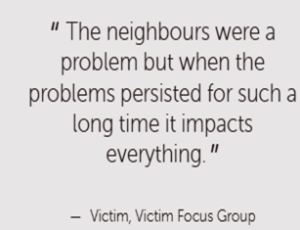
Real-life impact/Victims experience


YouTube video: How the lives of thousands of people are being destroyed by anti-social behaviour
National
The Crime Survey for England and Wales (CSEW) for year ending (YE) December 2025 showed that an estimated 39% of people experienced or witnessed anti-social behaviour (ASB). This was an increase from the previous year (36%). Although some of this increase was likely to be genuine, it may also have been because of changes to the ordering of questions in the CSEW questionnaire that were made in April 2025 (ONS, 2026).
Recent inspections by His Majesty’s Inspectorate of Constabulary and Fire & Rescue Services (HMICFRS) have found that many forces needed to improve how they identify and record antisocial behaviour. For further information see the HMICFRS report here, The policing response to antisocial behaviour: PEEL spotlight report – His Majesty’s Inspectorate of Constabulary and Fire & Rescue Services.
Local analysis

Figure 1: Count of ASB in Cambridgeshire between April 2022 and March 2026
Figure 1 details count of ASB incidents by month in Cambridgeshire. The chart shows a strong seasonal pattern, with peaks consistently occurring during the summer months and lower activities in winter. However, overall levels have steadily increased over time, with 2025 recording the highest volumes.
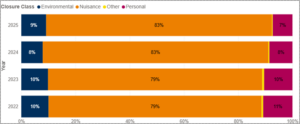
Figure 2: Proportion of Classes of ASB in Cambridgeshire between 2022 and 2025
Figure 2 details proportion of ASB incidents by class (category) from 2022 to 2025, in Cambridgeshire. The chart highlights that nuisance ASB consistently accounts for the highest proportion of incidents. This proportion has increased, rising from 79% in 2022 to 83% by 2025. Meanwhile, environmental and personal ASB have gradually declined in proportion, indicating that everyday disturbance and noise-related issues are now the primary concern across our various communities.

Figure 3: Count of ASB by districts in Cambridgeshire between 2022 and 2025
Figure 3 details annual counts of ASB incidents by district between 2022 and 2025. The chart shows a steady rise in ASB across all districts between 2022 and 2025, with Cambridge consistently reporting the highest levels between 2022 and 2024. Huntingdonshire has seen the most notable growth, recording the highest count in 2025 compared to the other districts in Cambridgeshire.
Sources:
- How to report antisocial behaviour: Overview – GOV.UK
- ONS, 2026: Crime in England and Wales – Office for National Statistics
- The policing response to antisocial behaviour: PEEL spotlight report – His Majesty’s Inspectorate of Constabulary and Fire & Rescue Services
All of the relevant reports can be found below in the reports section as well as in the document library.